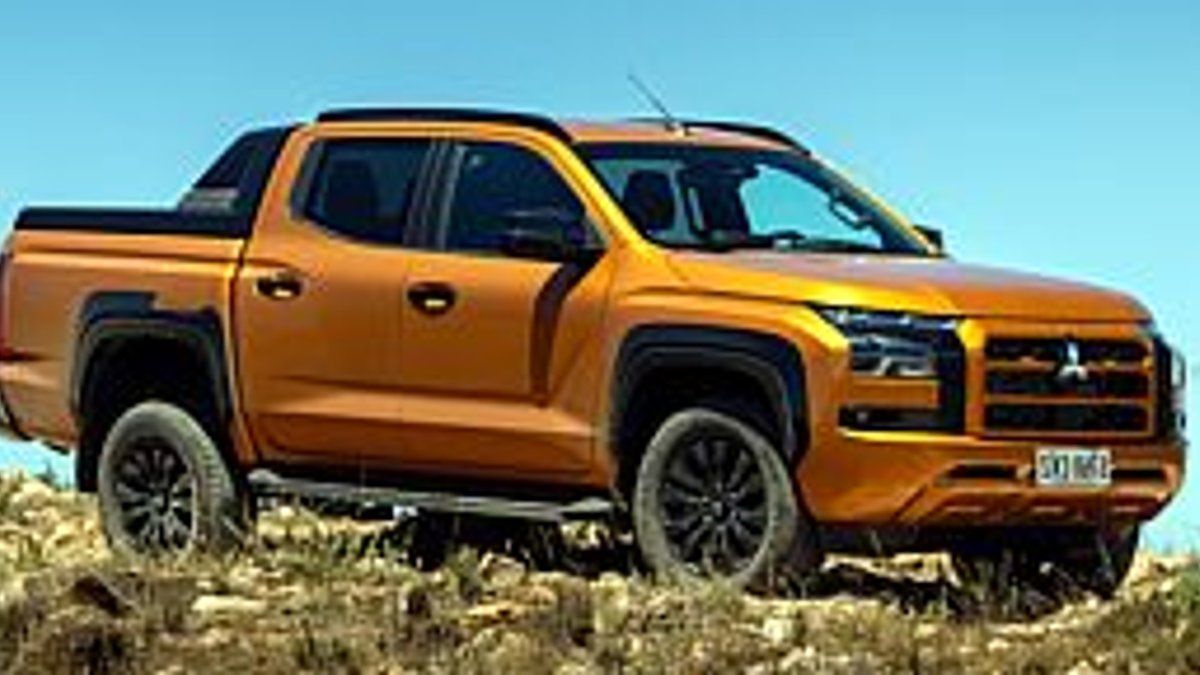
Honda has confirmed its intention to launch a Mitsubishi Triton-based utility vehicle in Southeast Asian markets starting in 2028, formalising a joint agreement that could eventually grant the Japanese automaker access to Australia’s competitive dual-cab ute market.
Joint agreement between Honda and Mitsubishi
The deal signifies the inaugural complementary vehicle supply agreement between the two firms and forms part of their wider strategic partnership with Nissan. A memorandum of understanding (MOU) will see Honda create a new model utilizing Mitsubishi’s existing Triton ladder-frame chassis, with manufacturing slated for Mitsubishi’s Thai production sites.
Under the agreement disclosed on October 22, Honda will obtain access to a proven utility platform without incurring the costs of developing an entirely new vehicle architecture, while Mitsubishi anticipates benefits from higher production volumes and enhanced factory utilization. For the Thai-based automaker, additional output would help distribute production expenses across a larger vehicle count at its domestic plants.
Although both companies have confirmed the new vehicle for ASEAN markets, neither has specified plans for an Australian launch. The Triton is already produced in right-hand drive for Australia and multiple Southeast Asian regions, offering a potential route for Honda to enter the local ute market without the substantial expense of designing its own model.
Japanese brand overlap
The initiative also suggests three Japanese manufacturers may soon offer variants of fundamentally the same one-tonne utility, as Nissan’s latest Navara already shares its core architecture and much of its mechanical components with Mitsubishi’s Triton. For Honda, this move deviates from its traditional product development strategy centered on in-house vehicle and platform engineering.
It is worth noting that Honda currently lacks a conventional ladder-frame utility in its global lineup, though it offers the Ridgeline dual-cab pickup in North America. Unlike the Triton, the Ridgeline employs a monocoque design and is primarily aimed at recreational and lifestyle users rather than heavy-duty towing, payload tasks, or off-road conditions typical of standard one-tonne utilities. Its left-hand drive setup has also effectively barred it from the Australian market.
The agreement stated it would enable Honda to swiftly enhance its product portfolio in regions where utility vehicles account for a significant share of new-car purchases.
Local sales remain uncertain
“Honda Motor and Mitsubishi Motors have announced development of a pick-up truck based on the Mitsubishi Triton for sale in ASEAN markets in 2028. We are not able to confirm if this model will be offered in Australia when it goes on sale,” said a Honda Australia spokesperson.
The specifications applicable to this Honda variant remain unclear. The firms have not revealed details on powertrains, body configurations, driveline options, or how visually distinct the new model will be from the Mitsubishi. They also have not confirmed whether Honda plans to introduce hybrid or electrified versions, which could become increasingly pertinent for any potential Australian launch under the New Vehicle Efficiency Standard (NVES).
A Honda-badged version might capitalize on the brand’s established dealer network and reputation for dependability, granting entry into a segment it has previously avoided locally. However, Honda Australia has consistently highlighted its Hybrid First strategy. Introducing a conventional diesel utility would thus mark a significant shift in its product approach.
Future of the alliance
The existing Triton is locally powered by a 2.4-litre four-cylinder twin-turbo diesel engine producing 150kW and 470Nm, paired with a six-speed automatic transmission. Australian-market versions provide up to 3500kg braked towing capacity, a one-tonne-class payload varying by trim level, and options for two- or four-wheel-drive configurations.
As previously reported, Mitsubishi is exploring hybrid and plug-in hybrid powertrain technologies for future ladder-frame models, including the Triton and upcoming Pajero. However, no connection between these developments and the Honda utility has been confirmed. The Triton agreement exemplifies how cooperation is expanding beyond technology development to encompass full vehicle supply.


