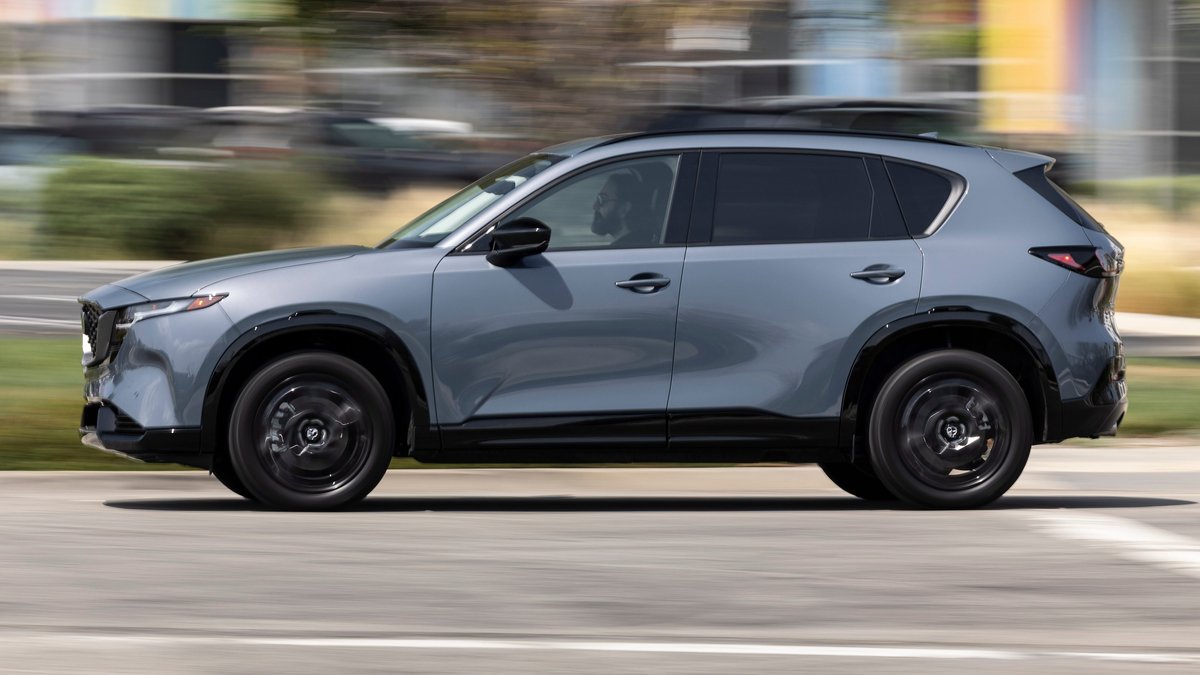
The 2026 Mazda CX-5 has been reviewed as a family car, with its features and performance being put to the test. In terms of child seat installation and dog ingress, the CX-5 has received positive feedback, thanks to its wide-opening rear doors, which make it easier to get kids into child seats or dogs into the back seat.
The CX-5 also earned a Good+ rating in IIHS testing of child seat anchors, which is the best possible rating.
Child Seat Installation and Cargo Area
The CX-5’s cargo area has been improved, with a bigger cabin and cargo area being two of the biggest changes for the 2026 model. While it may not have leapfrogged the CX-5 to the front of the class, the spacious cabin and trunk are now more competitive.
Read Also: Rivian R2 Named MotorTrend SUV of the Year
The 2026 CX-5 offers 33.7 cubic feet of cargo space, with an open, depressed area on both sides for storing items that you don’t want bouncing around. That’s more space than the Subaru Forester and Mazda CX-50 but less than the Kia Sportage, Toyota RAV4, and Hyundai Tucson.
Ease of Controls and Infotainment System
However, the CX-5’s ease of controls has been found to be lacking, with the infotainment system being slow and less intuitive than it should be. The system includes a 12.9- or 15.6-inch display, with almost everything being controlled through the screen and only a few physical buttons on the interior.
Adjusting the heated and ventilated seat, for example, requires touching a tiny sliver of the screen to access a secondary menu, which can be difficult to do while in motion. Fan speed adjustments could also be easier, and everything should be quicker.
The driver profile system has also been found to be frustrating, as it doesn’t reliably recognize the driver and defaults to the guest mode, requiring the driver to redo some settings. This can be a problem for families, as it can be frustrating to have to adjust settings while waiting for others to get in the car.
Read Also: Nissan Unveils Three Rugged Off-Road Concepts at SEMA Show
One possible solution is to avoid the top Premium Plus trim, which is the only one with the driver personalization feature. Another solution is to use the Google voice assistant, which allows for more complex commands to be given.
Google Voice Assistant and Mazda Connected Services
The Google-based voice command system means you can ask for headlines of the day or ask complex commands (“lower temperature to 68 and increase fan speed”). After an initial one-year trial period, the subscription cost for the Premium plan of Mazda Connected Services with Google Built-In is $15 a month.
Despite some improvements to system reliability, the CX-5’s tech has been found to be a miss from an ease-of-use standpoint. Mazda fans can brighten the situation by avoiding the Premium Plus trim and paying for the Premium plan from Mazda’s Connected Services. Or they could get a CX-50 Hybrid, accept its older infotainment system on a smaller screen, and not subscribe to anything.


