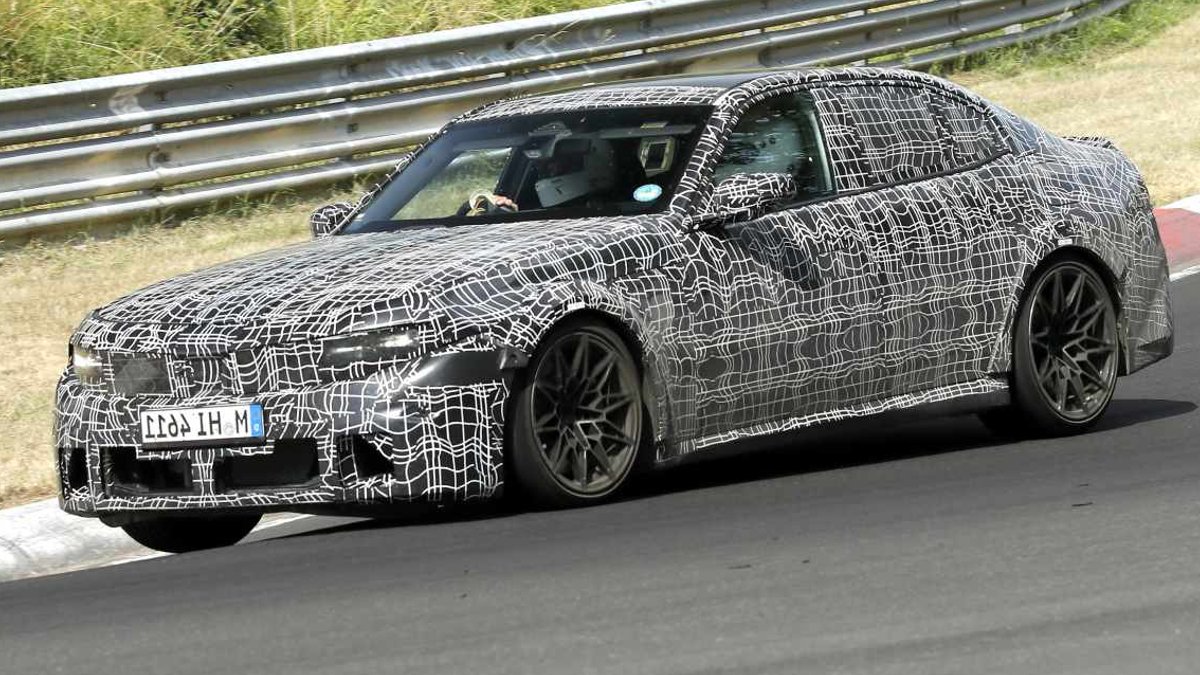
BMW is advancing its Neue Klasse lineup with a new M3 that will reach customers before the all‑electric version is officially unveiled, and the model under test is powered by a conventional petrol engine.
Design cues hint at a blend of tradition and future styling
The test mule spotted on the Nürburgring carries the current G80 M3’s “Competition” wheels, but the most noticeable change is the front grille. The vertical kidney grilles of the G80 have been replaced by a horizontal design that aligns with the broader Neue Klasse aesthetic.
Camouflage paint obscures many details, yet the angular surfaces echo the concepts shown in the M Concept Neue Klasse renderings, and the wide front and rear lighting units accentuate the car’s breadth.
At the rear, the familiar quad‑exit exhaust layout is present, and a series of cooling vents stretch across the bumper above the splitter. A larger spoiler attached to the boot is also evident, although it remains unclear whether the electric M3 will adopt the same element.
Related: Alpina B7 Bi‑Turbo Reaches 205mph in UK
Interior updates focus on driver assistance and sustainable materials
Inside, the cabin adopts a revised steering wheel that mirrors the controversial Neue Klasse design, while a rectangular infotainment screen replaces the older curved panel. Below the windshield, a full‑width “Panoramic iDrive” head‑up display—first seen on the iX3—provides key information at a glance. The bucket seats expected in the M3 return with a new emphasis on recyclable fabrics, matching the brand’s sustainability goals.
Overall silhouette stays close to the electric prototype, with swollen arches at both ends and conventional sedan proportions. The test vehicle uses placeholder rear lights, indicating final styling decisions are still pending.
The test mule sparked excitement among fans.
From a performance standpoint, the combustion‑powered M3 will sit on the same chassis as its electric sibling but forego the battery pack. BMW plans to equip it with a mild‑hybrid 3‑litre twin‑turbo straight‑six, likely an updated S58 engine featuring new cylinder heads, revised turbochargers, and an “M Ignite” pre‑chamber ignition system to meet Euro 7 emissions standards. While official power figures have not been released, estimates place output around 550 bhp, compared with the electric model’s projected 650 bhp from its quad‑motor setup.
Looking ahead, the electric M3 is slated for delivery in 2027, with the gasoline variant expected to follow roughly a year later. Pricing details remain undisclosed, but the dual‑track strategy suggests BMW aims to cater to both traditional enthusiasts and buyers seeking electrified performance.
Related: Commando Paintball Sports: A Thrilling Event Venue in Appleton, Wisconsin
Given the market’s shift toward electrification, launching a petrol‑only M3 may seem counterintuitive, yet it could preserve a niche for drivers who value the sound and feel of a naturally aspirated engine. If regulatory pressures intensify, the mild‑hybrid setup might provide a transitional bridge, allowing the company to comply while still delivering the driving trends the M badge promises.
Potential market reception and regulatory considerations
The decision to offer both electric and combustion options under the same model name could split consumer interest. Enthusiasts who have followed the M3 lineage for decades may welcome a high‑performance straight‑six, especially if it retains the characteristic exhaust note. Conversely, buyers prioritizing lower emissions might gravitate toward the electric version, anticipating future incentives for zero‑emission vehicles.
Regulators in Europe are tightening emissions limits, and the Euro 7 standards demand significant reductions in CO₂ output. The brand’s adoption of the “M Ignite” system indicates an effort to meet these constraints without sacrificing performance. However, the long‑term viability of a gasoline‑only M3 will depend on how quickly markets adopt stricter fuel‑economy rules.
In the short term, the dual‑launch strategy may help BMW maintain sales volume while the brand transitions its portfolio toward electrification. By offering a familiar powertrain alongside a cutting‑edge electric alternative, the company can hedge against uncertainties in consumer preferences and regulatory timelines.


