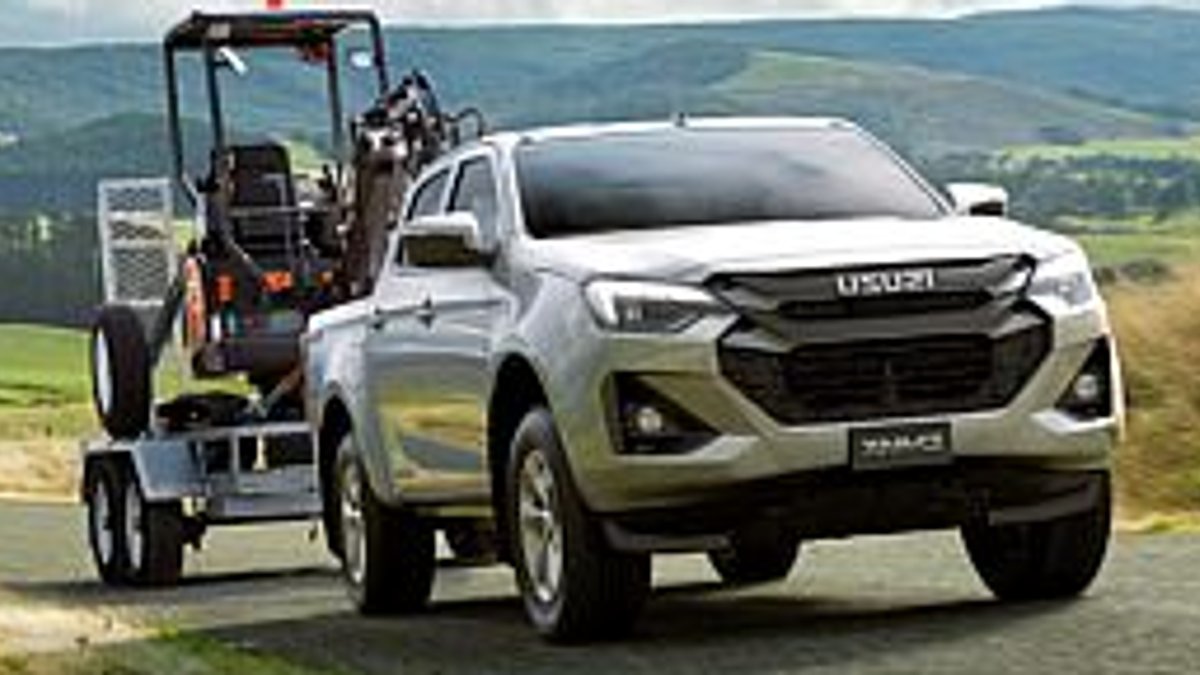
Isuzu unveiled a new 2.2-litre bi-turbo diesel powerplant for the updated D-Max ute and MU-X SUV in Thailand, promising more power than the long-standing 3.0-litre unit favored by Australian buyers.
Performance boost and technical details
The fresh motor produces 150kW and 500Nm of torque, topping the older 4JJ3-TCX 3.0-litre version by 10kW and 50Nm.
It relies on a two-stage turbo system: a variable-geometry low-pressure turbine paired with a high-pressure unit. This arrangement widens the usable rev range and sharpens acceleration.
Engineering updates include revised lubrication and cooling, reinforced cylinder liners and ultra-low-friction pistons coated with a specialised surface. Fuel is injected by Isuzu’s Gi-Boost high-pressure common-rail system, reaching up to 250 MPa through ten-hole injectors.
Peak output arrives at 3,600 rpm, while maximum torque is available between 1,600 and 2,600 rpm. Compared with the single-turbo 2.2-litre model sold in Australia (120 kW, 400 Nm), the twin-turbo version adds 30 kW and 100 Nm.
Isuzu says the new setup improves overtaking acceleration by 12 percent between 80 and 100 km/h and cuts 0-100 km/h sprint time by five percent. An eight-percent extra-urban fuel-efficiency uplift is also advertised, though Australian consumption and CO₂ data have not been released.
Regulatory backdrop and market implications
The announcement arrives as Isuzu Ute Australia (IUA) faces tighter emissions rules under the New Vehicle Efficiency Standard. The current 3.0-litre motor meets Euro 5, but Euro 6d-equivalent standards become mandatory for new light vehicles on July 1 2028.
IUA told local media the new powerplant is currently limited to the Thai market and that the company is still assessing product opportunities based on customer needs, market conditions and regulatory obligations. No timeline for an Australian launch has been given.
Last month the importer confirmed it would keep both the existing 2.2-litre and 3.0-litre diesel lines for the foreseeable future and ruled out a battery-electric D-Max. Executive general manager Rod Caldwell said diesel remains central to the brand’s local offering because of Australian towing, payload and long-distance travel demands.
In Thailand the twin-turbo motor is paired with an eight-speed torque-converter automatic, while a six-speed manual is available on selected D-Max trims. The eight-speed gearbox, already sold in Australia with the single-turbo 2.2-litre, offers closer ratios that keep the motor in its most efficient rev band.
Exterior updates accompany the mechanical changes. The refreshed D-Max gains new grille inserts, bumper styling and altered fog-light surrounds. The MU-X receives a redesigned grille and rear diffuser treatment. New alloy-wheel designs complete the visual refresh.
Competitors such as the Toyota HiLux already offer a 2.8-litre turbo with identical 150kW and 500Nm output, showing the market shift toward smaller, high-output units.
Market positioning and regulatory considerations
Following the Thai rollout, the twin-turbo unit now serves as the sole diesel option for the MU-X across that market. Buyers can still select the older single-turbo 2.2-litre if desired.
Only a narrow range of D-Max variants in Thailand retain the larger 3.0-litre engine, while the majority have transitioned to the newer 2.2-litre configurations.
Future outlook for Australian offerings
Potential buyers in Australia will be watching closely for any announcement regarding the new engine. The new powerplant offers an indication of how Isuzu intends to extend the competitiveness of its diesel-powered models as emissions regulations tighten.


