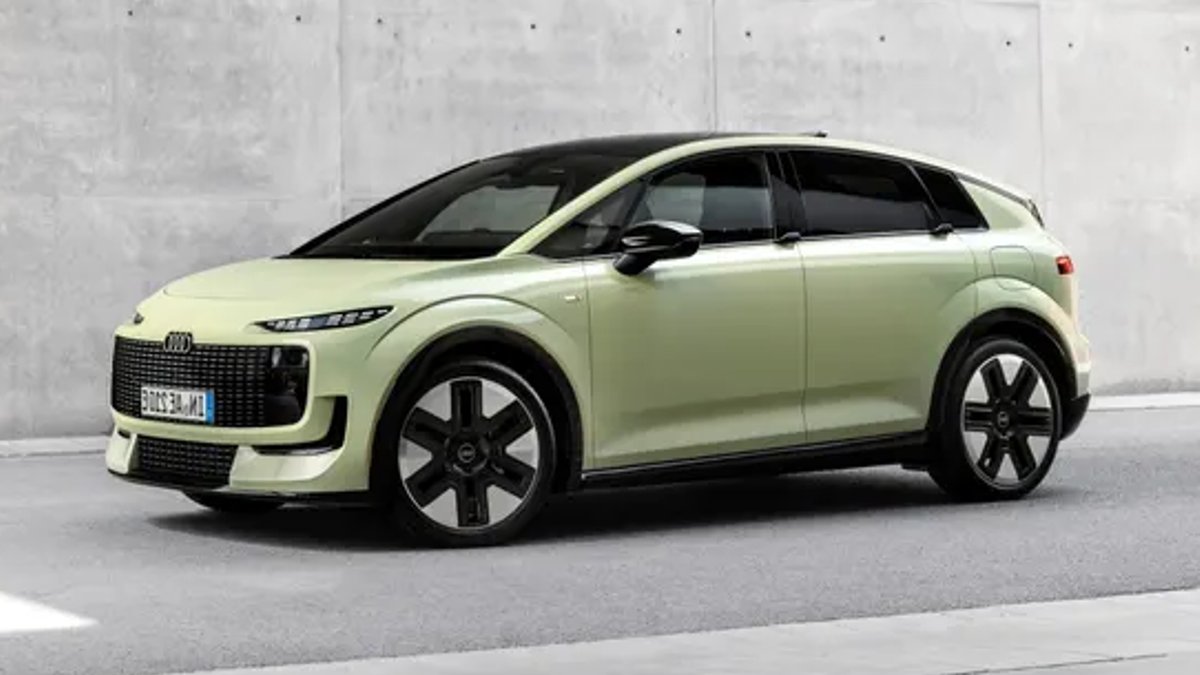
Audi is bringing back the A2 nameplate for a new compact electric vehicle that will serve as the entry point to its EV lineup in Europe. The new A2 e-tron has already launched in the region, with deliveries beginning in December. The automaker has no plans to sell the model in North America, focusing the vehicle on European customers.
Compact Size and Lower Price Point
The vehicle measures about 168 inches long, 71 inches wide, and 60 inches high. It is significantly smaller than the A3 but comparable to the size of the U.S.-market A3 Sportback that arrived nearly a decade ago. Despite its compact footprint, the A2 e-tron features a wheelbase of 109.1 inches and short front and rear overhangs, which helps maximize interior space. Pricing in Germany starts at 38,200 euros.
This model represents a shift in strategy. While the discontinued Q2 was designed with a potential U.S. entry in mind, the A2 e-tron is tailored to European needs. Its combination of compact dimensions, relatively long driving range, and a lower price than the Q2 aims to broaden Audi’s electric offerings in Europe.
The A2 badge had not appeared on an Audi since the aluminum-bodied A2 produced between 1999 and 2005. The original model was known for its lightweight construction and aerodynamic efficiency. The new version pursues similar goals but relies on a battery-electric drivetrain and more conventional steel-based construction underneath.
Under the skin, the A2 uses the Volkswagen Group’s MEB platform and a 400V electrical architecture. This technology debuted on the Volkswagen ID.3 in 2019 and was recently upgraded with the ID.3 Neo. A single permanent-magnet synchronous electric motor at the rear provides rear-wheel drive. The powertrain includes silicon-carbide power electronics to reduce electrical losses, while the single-speed transmission features polished gear teeth, friction-optimized bearings, and lower-viscosity oil to improve efficiency.
Four powertrain and battery combinations will be available at launch, with outputs ranging from 168 hp to 322 hp. The highest output trims shave the 0-62 mph time down to just 5.7 seconds. The base 52-kWh battery provides 263 miles of range by Europe’s WLTP test cycle, while a 61-kWh battery offers 320 miles. The top 84-kWh pack brings up to 401 miles of range.
Audi is using two battery chemistries across the lineup. The 52-kWh and 61-kWh packs utilize lithium iron phosphate cells with a cell-to-pack design that eliminates conventional modules to increase efficiency. The larger 84-kWh battery switches to nickel manganese cobalt chemistry with modular construction. DC fast-charging power varies by size, with the smaller packs offering lower charge rates; the time to charge from 10% to 80% ranges from 24 to 29 minutes.
Related Post: Volkswagen Unveils Mission Efficiency EV, Reviving XL1 Legacy
Audi claims the A2 is its most energy-efficient series-production electric model to date. The 188-hp version achieves about 4.9 miles per kWh when equipped with an optional efficiency package. This efficiency is aided by a drag coefficient of 0.24, the lowest of any current compact Audi. The design includes an actively controlled front cooling intake, an enclosed underbody, optimized wheels, and gap reducers to control turbulence.
Interior and Features
Inside, Audi has introduced a “softwrap” feature, a fabric-covered structure that extends from the instrument panel into the doors and the rear passenger compartment. The company focused on reducing the battery’s installation height, which improves the seating position and rear-seat legroom. Standard equipment includes an 11.9-inch digital instrument display and a 12.8-inch center touchscreen that forms a single panel. An augmented-reality head-up display is optional. Physical controls on the steering wheel and in a central pod remain available for frequently used functions.
Cargo capacity is rated at 14 cubic feet behind the rear seats, expanding to 47 cubic feet when those seats are folded. The two 84-kWh versions additionally feature a small 0.5-cubic-foot frunk under the hood. Steering-wheel paddles toggle through three levels of regenerative braking, and selecting “B” with the column-mounted gear selector enables one-pedal driving.
Standard driver-assistance features include adaptive cruise control, a rearview camera, parking sensors, and side assist. An optional system provides active lane guidance at speeds up to 130 mph. The A2 also supports bidirectional charging, allowing vehicle-to-load functionality to power accessories and vehicle-to-home capability to act as a residential energy-storage system through a compatible DC wallbox.
The two top-trim 84-kWh versions include a sport setup and adaptive dampers. Wheel sizes range from 18 to 20 inches. Production will take place at Audi’s Ingolstadt manufacturing site in Germany alongside the A3. Rather than creating an entirely new production system, Audi says it has reused more than 1200 existing manufacturing assets, including 250 robots previously used to build discontinued models.
Audi says the A2 was developed 21 months faster than comparable predecessor programs. This speed reflects a wider effort to shorten product-development cycles. It also helps reduce manufacturing complexity.


