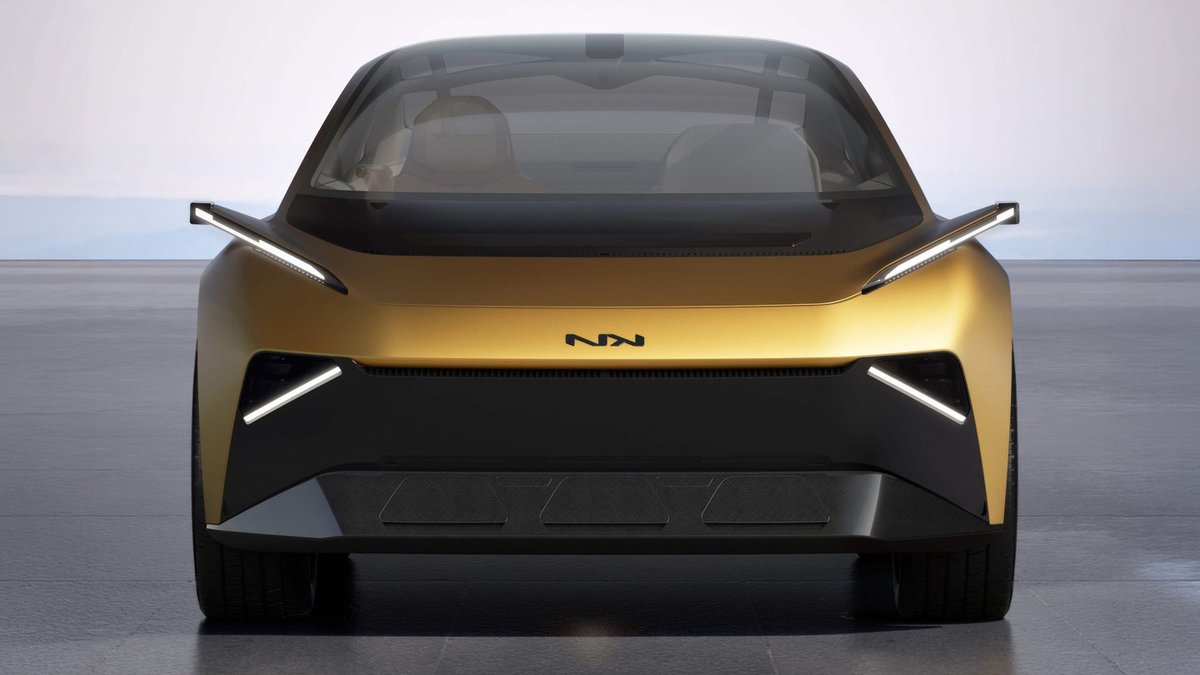
Kia’s R&D chief sees an opportunity to fill a gap left by Nissan’s GT-R, which ended production in August 2023 after a 20-year run as a high-performance icon. Speaking to Autocar, Hyundai Motor Group’s Manfred Harrer acknowledged the appeal of creating a Kia GT model that matches the GT-R’s blend of supercar speed and affordability. “I like the idea,” Harrer said. “You see a lot of car makers going that way, so why not?,” he said.
His experience at BMW and Porsche brings credibility to the notion, given his background in performance vehicles. However, his immediate focus is on establishing a dedicated GT car that defines Kia’s performance identity. For years, that role belonged to the Stinger, a rear-wheel-drive sedan known for outperforming rivals in its class. More recently, Kia’s EV6 GT delivered 641 horsepower (478 kW), but this variant is now paused, creating space for a new direction.
The GT-R’s legacy stems from its twin-turbo V6 engine, advanced all-wheel-drive system, and continuous refinement, which sustained its reputation long after launch. Kia lacks a clear flagship to match that halo effect, a gap Harrer recognizes. The proposed approach would likely follow a stepwise strategy, starting with a dedicated GT model before exploring higher-performance variants. Unlike Kia’s current focus on fast family vehicles, a GT car would target making Porsche owners a little nervous—a different animal.
Harrer’s vision aligns with broader industry trends, as automakers increasingly focus on performance sub-brands to enhance their offerings. The EV6 GT’s temporary absence creates space for Kia to flex back into its performance aspirations, and a new GT model could anchor that shift. While the Stinger’s discontinuation left uncertainty, Harrer’s comments suggest Kia is considering a successor that redefines its GT badge. The challenge lies in balancing cost and performance, mirroring the GT-R’s original formula. A dedicated GT car would give Kia that clear next step. It could also use it as a basis for turning up the performance, if buyers responded.
Nobody questioned that of Nissan while the GT-R was still on sale; its R35 generation set a benchmark for accessible performance that few brands matched. Kia could absolutely use that same sort of halo vehicle. The brand is already very successful, but what is its true flagship? A dedicated GT car would give Kia that clear next step. It could also use it as a basis for turning up the performance, if buyers responded. The EV6 GT’s performance proved Kia’s capability in electric performance, but scaling that into a standalone GT line requires strategic planning.


