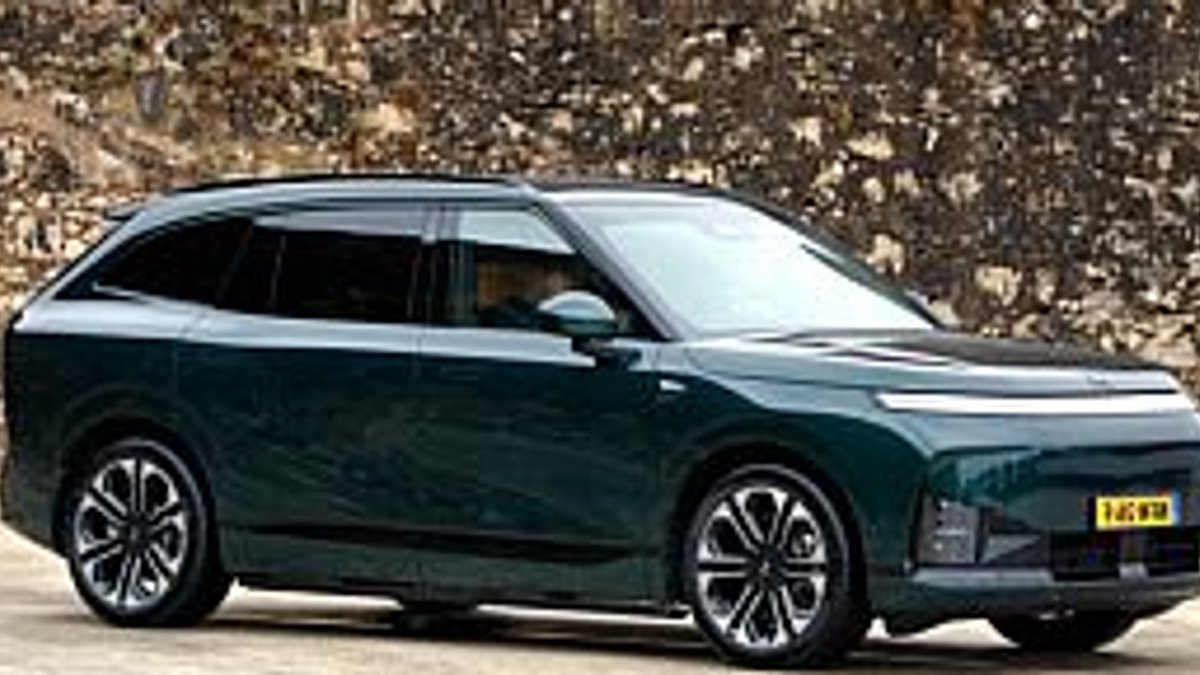
XPeng aims to launch its G9L large SUV in Australia with a starting price of around $75,000, focusing on rear-wheel-drive battery electric variants to appeal to novated leasing customers when the vehicle arrives in early 2027. The company hopes to qualify at least one BEV configuration for the expected $75,000 ceiling on the full Fringe Benefits Tax (FBT) exemption, which is set to take effect on April 1, 2027, replacing the current waiver cap of $91,661.
Proposed legislation would retain the full FBT exemption for BEVs valued at $75,000 or less for new lease commitments between April 1, 2027, and March 31, 2029. BEVs priced between $75,000 and the $91,661 Luxury Car Tax threshold would receive a 25 percent discount on the FBT payable instead.
Performance and specifications
XPeng Australia plans to announce local pricing and specifications before the end of 2026, as the brand prepares a 66-location sales and service network following its shift to factory-backed distribution. Australian specifications are likely to mirror those in Europe, where RWD versions produce 270kW/465Nm with a 591km WLTP range, while the AWD Performance Ultra develops 430kW/695Nm and claims 553km. Both variants use a 110kWh NMC battery pack with 540kW peak DC charging. A petrol-assisted range extender (REEV) hybrid version is also confirmed for Australia, featuring a 63kWh battery and a 1.5-litre turbocharged petrol four-cylinder as a generator, but it is not subject to FBT waiver scheme pricing pressures since plug-in hybrids do not qualify for the concession.
A test drive of the G9L on Portuguese roads demonstrated the vehicle’s potential as a family SUV with premium features at a sub-premium price. The air springs provided a composed ride quality, even on 21-inch wheels, absorbing sharp-edged bumps and limiting vertical bob. The G9L AWD’s 430kW powertrain delivered muscular overtaking performance without feeling intimidating, while braking and regen deceleration blended smoothly.
Rear-wheel steering substantially reduced the vehicle’s perceived length and width. The interior is spacious across three rows, with the top-spec Performance Ultra featuring Nappa leather (across the seats, dash and doors), heating, ventilation, and massage for the first two rows, a refrigerator, flip-down rear screen, and a premium stereo. A mixed 180km drive returned 18.4kWh/100km against a claim of 19.8kWh/100km.
In comparison to the smaller L03, the G9L exhibits a notable difference in ride quality, with the G9L centering itself almost immediately after surface disturbances. This contrast highlights a growing gap between XPeng’s high-series ‘G’ models and the more affordable ‘L’ line, where comfort and refinement are concentrated in the premium trims. While the G9L’s ride recalls a standard Audi Q7, the Audi remains superior in terms of steering response and handling. The driver’s seat has an extending thigh cushion but lacks the ability to tilt upwards or downwards.
Local market positioning
XPeng Australia aims to deliver a well-specified base grade below the critical FBT threshold for BEV novated leases. If a sub-$75,000 price can be achieved, out-of-pocket costs for leasing customers would be significantly lower compared to financing mainstream three-row rivals, such as the Hyundai Palisade (from $76,500 before on-road costs) and Volvo XC90 (from $97,990 + ORC), or BEVs like the Kia EV9 (from $97,155 + ORC) and Hyundai Ioniq 9 ($119,668 + ORC). At such a price, the G9L would likely be the largest, plushest SUV available with a full FBT waiver, making it a significant selling point.
Future technology plans
It is likely that only the top-shelf Performance Ultra grade of the G9L will be equipped with the necessary hardware to run XPeng’s VLA self-driving software in Australia in the future. This hardware requirement may push the price of the most advanced trim above the FBT threshold, potentially creating a market split where basic versions receive the tax break and high-spec versions offer autonomous features.
The Australian-market REEV is expected to have a preliminary range of 287km in EV mode and 1200km combined on the WLTP cycle, although local homologation is still pending. The petrol engine in the hybrid version acts solely as a generator, mounted under the bonnet, and does not drive the wheels directly, which is central to the vehicle’s efficiency goals.


