The Peugeot 205 GTi (1984–1994) did not invent the hot hatch but reshaped the category. Weighing just 900kg, its 1.6-litre 105bhp engine delivered surprising speed, while later versions—including the 130bhp 1.9-litre—gained extra torque, disc brakes, and lower-profile tires. The car’s reputation for fragility is exaggerated; it holds up well, though gearbox and suspension wear remain common. Special editions like the Sorrento Green and Miami Blue ’89, featuring leather trim and power steering, stand out, but originality drives value. Early, unmodified models are now the most desirable.
Ford’s Fiesta MkVII ST (2013, 2017) set a new standard for refinement. Its 1.6-litre Ecoboost generated 180bhp (or 197bhp with overboost) and 214lb-ft of torque, all managed by torque-vectoring software that mimicked a limited-slip differential. A stiffer rear torsion bar, all-round discs, and a 15mm lower ride height sharpened its balance, making it effortlessly quick in any condition.
The Renault Clio Williams (1993, 1996) proved a rally-bred road car could excel. Its 2.0-litre 148bhp engine, shared with Formula 1’s dominant team, paired with a 981kg kerbweight and manual transmission. The front subframe came from the Clio Cup racecar, while uprated suspension ensured serious performance from an homologation special.
Honda’s Civic Type R EP3 (2001, 2005) carried the Integra Type-R’s legacy into a hatchback. Its 197bhp 2.0-litre VTEC engine revved to 7,400rpm, though 142lb-ft of torque feels modest today. It still accelerated to 60mph in 6.6 seconds and offered a precision gearshift, despite a stiff ride and handling quirks in wet conditions.
Rally Roots: The Delta Integrale’s Dominance
The Lancia Delta Integrale Evo 2 evolved from a Golf rival into a WRC legend. Debuting in 1989, it produced 212bhp and featured a Torsen differential, though its interior felt outdated. Suspension wear, brake replacements, and cam-belt checks are inevitable for owners, yet its rally pedigree remains unmatched.
Renault’s 5 Turbo 2 (1983, 1986) was a mid-engined rally weapon, less famous than the Peugeot 205 T16 but equally effective. Its 1.4-litre turbocharged engine generated 158bhp, and its rear-wheel drive made it surprisingly quick. Cost-cutting measures replaced aluminum body panels with steel, but Gandini-designed bodywork kept it sharp.
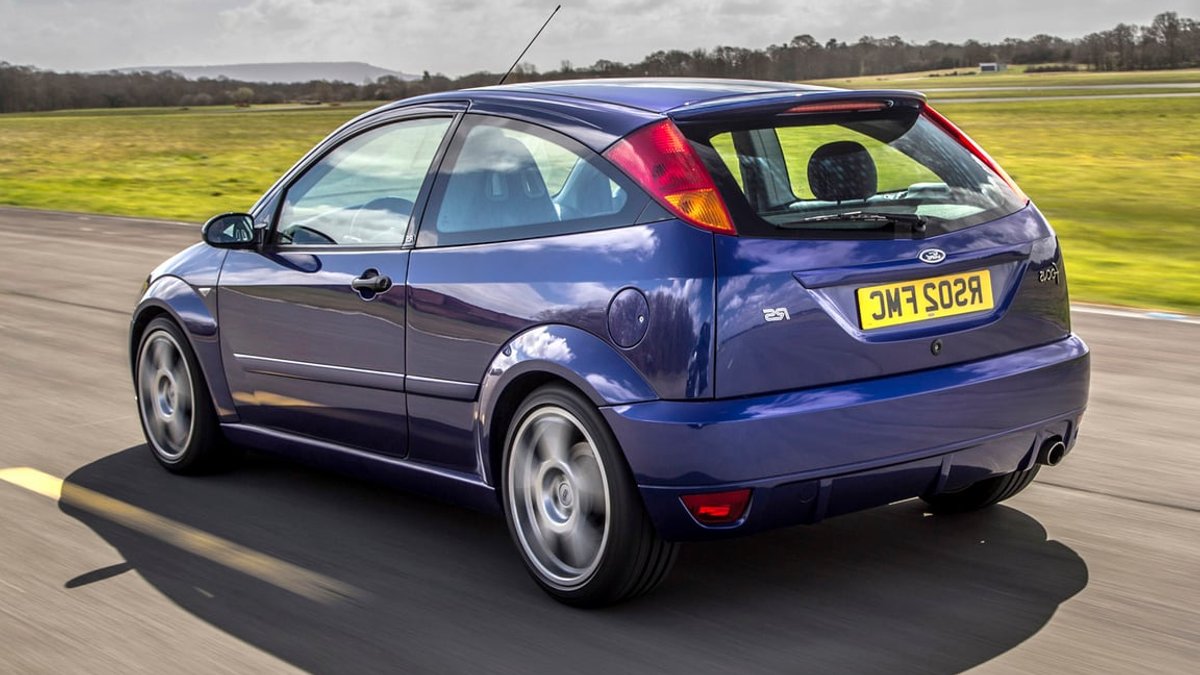
Ford’s Focus RS Mk1 (2002, 2003) arrived after a four-year wait with 212bhp from a 2.0-litre turbocharged engine and a Quaife limited-slip differential. Only 4,501 were built, priced under £20k. Its torque steer and jiggly ride were quirks, but stance, handling, and raw speed made it unforgettable.
The VW Golf GTi MkV (2005, 2008) finally overcame the weaknesses of earlier models. Its 2.0-litre TFSI produced 197bhp, and independent rear suspension replaced the old beam axle, improving balance. The dual-clutch DSG was ahead of its time, though the manual remained more engaging. The MkV was larger but still finely tuned, proving VW had learned from past mistakes.
The Renault Clio 182 Trophy (2005) was a 500-unit limited edition with rally DNA. Separate oil and gas reservoirs allowed for stiffer dampers, while shorter springs and a 10mm lower ride height sharpened handling.
Modern Hot Hatches with Track DNA
The Renault Megane R26.R (2009, 2010) combined track-day grip with road usability. Its 227bhp output delivered front-end bite and telepathic handling through keener dampers and optional track-spec Toyo tires, which also performed well in wet conditions.
Honda’s Civic Type R (FK8, 2017, 2021) was polarizing, some preferred the EP3—but its 315bhp and £32,995 price tag set a modern benchmark.
The Toyota GR Yaris (2020, present) marks the first rally-homologation hot hatch in decades. Designed with WRC DNA, it balances hot hatch agility with rally-car grip. It’s not just a shopper with a turbo; it’s a purpose-built driver’s car, reviving the spirit of the Impreza and Evo era.
These cars share a defining trait: they redefine the boundary between fun and function. Whether through lightweight construction, rally heritage, or modern technology, each pushes what a hot hatch can achieve. The best ones don’t just go fast, they make driving feel alive.
The Peugeot 205 GTi remains a benchmark for affordability in the modern market, with Type R models now offering similar performance at accessible prices.


