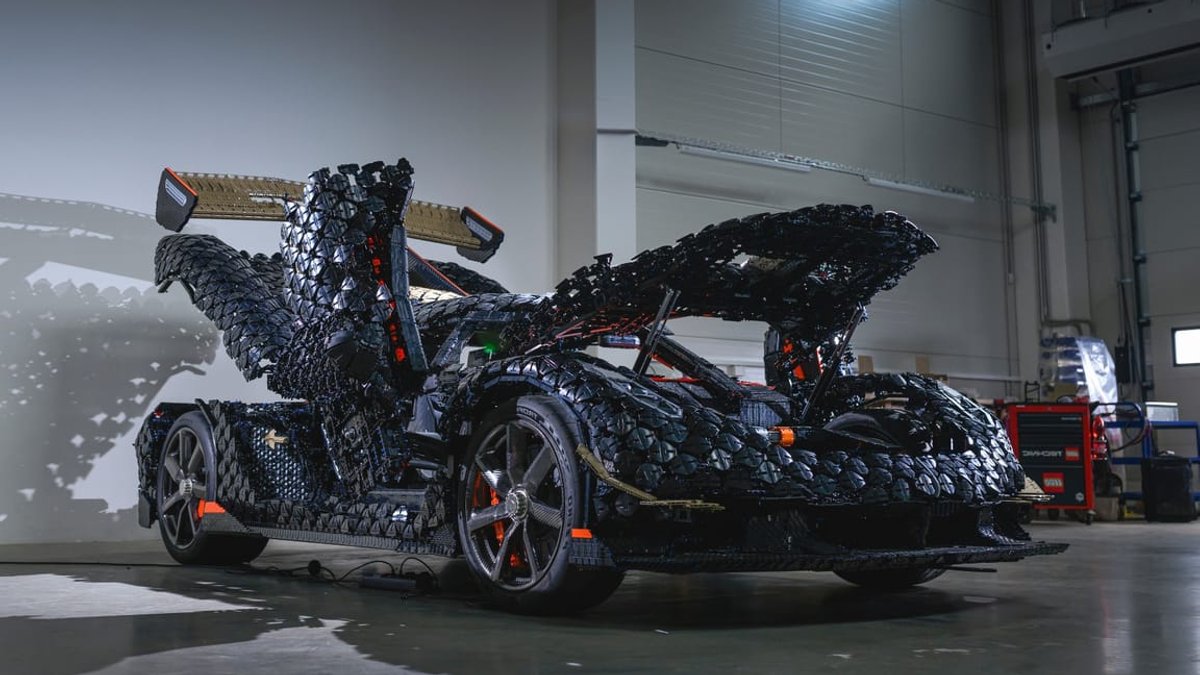
LEGO has created a life-sized, record-breaking version of the Koenigsegg Sadair’s Spear. The model, constructed from 327,906 individual plastic bricks, stands as the latest achievement in the Danish company’s long history of transforming small plastic blocks into complex engineering feats. While the corporate headquarters in Billund are famous, the actual model building takes place in a far less glamorous facility on an industrial estate in Kladno, approximately 20 miles west of Prague in the Czech Republic.
A garage full of giants
The Kladno facility serves as a dream factory for model builders. It is here that the life-sized models used in Legoland parks and promotional events are created. The team produces roughly 1,500 such models annually. While the public might associate the brand with toys for children, the technical skill required to assemble a vehicle made of over 300,000 bricks is immense. Builders work with hi-vis vests and steel-toed shoes, handling a workspace filled with chimneys designed to vent fumes from the industrial-grade glue used to secure the massive assemblies.
Related: Skoda to rebrand England’s Lake District
Engineering the impossible
Design lead Lubor Zelinka explains that the challenge was to break down the car body into smaller, repeatable panels. This allowed the builders to assemble the massive structure without placing individual bricks one by one. The design process focused on significant elements of the brand, specifically using the family crest’s checkered pattern as a template for the bodywork. The choice of black bodywork with black connectors for the assembly process added an extra layer of difficulty for the builders.
The team utilized parts from across the Lego catalog to create the specific details of the vehicle. Headlights were sourced from Star Wars ship canopies. Rear lights use house or train windows. Brake lights are adapted from emergency police lights. Even the suspension dampers are repurposed wheel rims from a Ninjago set. Zelinka, who studied multimedia and worked in animation before joining Lego, views the physical build process as a distinct challenge from digital modeling. He notes that while movies fake effects for the camera, a Lego model must work from every angle.
Related: Man jailed for faking Jaguar crash drama
The builders worked in three separate shifts to assemble the car before its top speed run. By the time the test took place, the car weighed 1,800kg. On the day of the run, the builders had managed to secure the real Koenigsegg shield onto the bonnet just in time. The vehicle achieved a top speed of 111kph, or 69mph. This figure remains faster than previous full-scale builds, such as the McLaren P1, which was piloted by Lando Norris to 31mph.


