While many enthusiasts consider the V8 the new standard for performance, a small group of ten-cylinder machines still stands out. These cars demonstrate the peak of internal combustion engineering, from Stuttgart streets to Italian racetracks, leaving a lasting impact on automotive history.
The best sounding ten-cylinder engines
The Lexus LFA debuted in 2009 after a famously long development process. Production was limited, and prices were steep, with performance figures that now seem modest. Yet the 4.8-litre, 72-degree V10 under its hood delivers a sound few engines can rival. The ‘1LR-GUE’ engine, developed with Yamaha, required a digital rev counter to track its rapid climb to 9,000rpm.
The first-generation Audi R8 arrived in 2007, fitting a 5.2-litre V10 behind its cabin. This engine, peaking at 562bhp, allowed the car to match its Le Mans quattro concept roots. Most models came with a seven-speed dual-clutch transmission, though some six-speed manuals remain available for enthusiasts. The second-generation R8, introduced in 2015, offered a 533bhp base model and a 602bhp V10 Plus, with a Spyder version for open-air driving.
Lamborghini expanded on this legacy with the Gallardo, released in 2005. The model sold 14,000 units over nearly a decade, featuring 5.0- or 5.2-litre V10s in Coupe or Spyder forms. Drivers seeking purity could opt for the rear-wheel-drive LP550-2, while those chasing lap times might prefer the lightweight Superleggera or Squadra Corse. The Gallardo ended production in 2014 to make room for the Huracán, which followed a similar path with 13 editions over ten years.
Related: Cadillac Leads F1 After Extraordinary Review
Inside the Huracán, the 5.2-litre V10 produced 572bhp in standard models and 602bhp in top-tier versions. The Tecnica, STO, and STJ editions combined this power with rear-wheel drive. The most distinctive variant, however, was the Sterrato, a 602bhp off-road model that ended production before the V8 hybrid Temerario arrived.
Unusual places for a V10
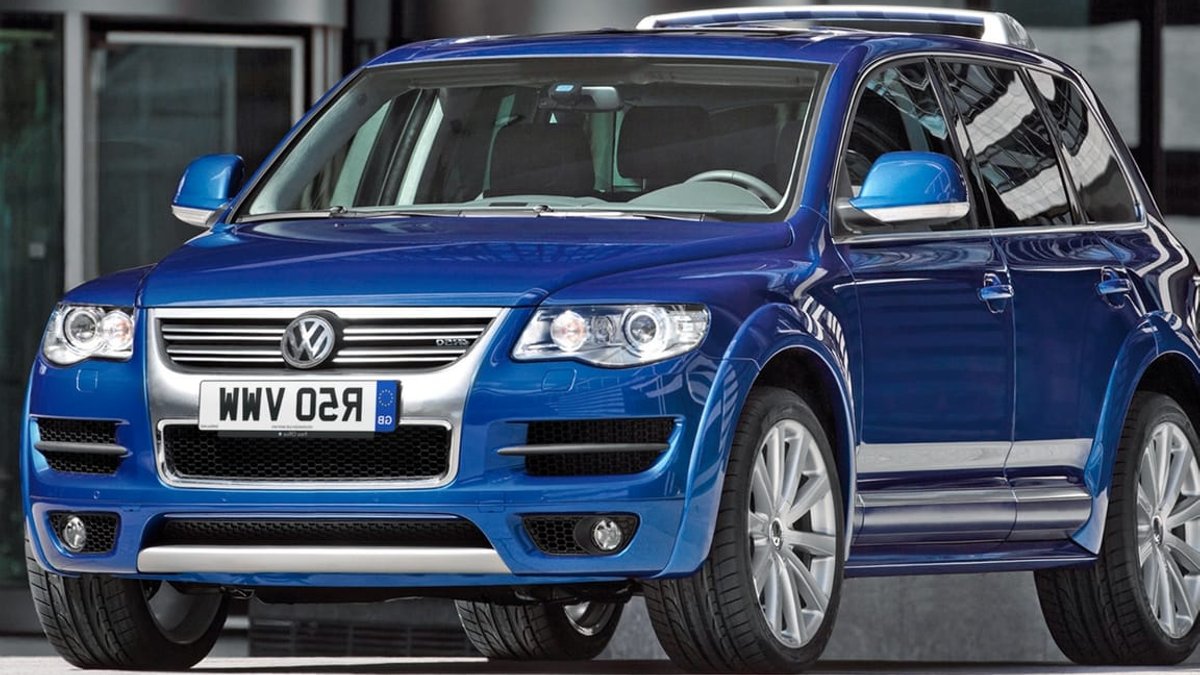
The Volkswagen Touareg demonstrated that a V10 could work in an SUV. The post-facelift R50 model delivered 345bhp and 627lb ft, accelerating from 0-62mph in under seven seconds and reaching 146mph despite weighing 2.6 tonnes. This diesel powertrain differed sharply from the typical family SUV. The Phaeton limousine used the same engine, a project championed by Ferdinand Piëch. Selling a ten-cylinder diesel saloon in significant numbers was ambitious, but these vehicles now appear in classifieds at lower prices.
The Bristol Fighter, a UK-made gullwing car, housed a 525bhp version of an 8.0-litre Viper V10. The design promised a smoother gearshift in a narrower body. Only about a dozen were built, and the planned 1,012bhp twin-turbo Fighter T never materialized. The Alfa Romeo TZ3 Stradale took a similar approach, using a Viper ACR chassis and Zagato-designed carbonfibre bodywork.
The Engler Desat, built in Slovakia, claims to be the “world’s first superquad.” It shares the 612bhp 5.2-litre V10 from the second-generation R8 and Huracán, with twin turbos pushing output beyond 1,000bhp and speeds over 200mph. Another track-only model, the McLaren Solus GT, uses a naturally aspirated Judd V10 instead of the brand’s usual twin-turbo V8. The 5.2-litre engine generates 828bhp and gains an additional 30 horsepower on track. McLaren produced 25 units, each priced at £2.5 million.
Related: Firm buys Epyx and R2C Online assets
BMW also developed notable V10s. The E60 M5 introduced a 500bhp 5.0-litre engine that achieved 100bhp per litre without forced induction. It revved to 8,250rpm, though reliability concerns occasionally arose. The M6 Convertible shared the same 500bhp and 383lb ft output, paired with a seven-speed automated manual gearbox. Wiesmann placed the same engine in its MF5 roadster, while the Veritas RSIII used it in a carbon and Kevlar body.
High-performance saloons and track toys
The Audi RS6 adopted an early Gallardo-era 5.0-litre V10 and added two large turbochargers, resulting in 572bhp and 479lb ft. This supersaloon responded to the BMW M5’s ten-cylinder power but offered less engaging driving trends. A detuned version of the R8’s 5.2-litre engine powered the Audi S8, producing 444bhp and 398lb ft in a long-wheelbase limousine.
The Porsche Carrera GT, with its ‘M80/01’ engine, remains a standout. The 604bhp, 8,400rpm, 5.7-litre V10 powered a carbon-fibre roadster with a manual gearbox and ceramic clutch. Used models now sell for over a million pounds. Lamborghini’s Sesto Elemento took a facelifted Gallardo and its 562bhp V10 but pursued a radical design. With a £2 million price tag and only 20 units made, it was a bold experiment.
These engines continue to captivate, proving that the V10 remains a symbol of engineering excellence.


